





Undercarriage Wear and Track Tension: What to Check and When
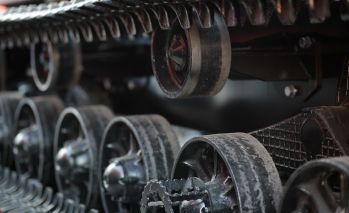
Track tension is one of the most important checks on a tracked machine, and it’s a daily one. A track that’s too tight wears the rollers and idlers faster and costs power. One that’s too loose can come off the machine. Check it on the job site every day, after the machine has run for a while, because packed mud makes a track tighter. Measure it the way your operator’s manual says. Clean the undercarriage out at the end of the day, never force a frozen track, and have a technician measure the undercarriage once a year so you know how much life is left.
Check the tension every day
The undercarriage is a significant part of what a tracked machine costs, and the way it’s checked and run decides much of how long it lasts. How you measure the tension depends on the machine. The check runs like this:
- Park on level ground.
- Lift the track off the ground.
- On an excavator, use the boom and bucket.
- On a track loader, lower the lift arms and tilt the bucket to raise the front of the machine.
- Measure the sag at the point your manual shows.
- Set it to your manual’s figure.
- Adjust at the track adjuster behind the front idler. Pump in grease to tighten the track, or loosen the release valve to let grease out. Stand away from the front of the grease fitting while you loosen the valve, and open it only as far as the manual says. Takeuchi’s procedure for its track loaders is one full turn.
Our general range is 0.6 to 1.2 inches (15 to 30 millimeters), measured between the middle track roller and the track, and Takeuchi gives the same range for its track loaders. Other machines use their own figure. Our Track Tension Tips article makes the point that even small adjustments in track sag can drastically change tension.
Check it on the job site, not in the shop. When mud packs into the track chain and the sprocket, it makes the track tighter. So a track with the correct tension in the shop can end up too tight once the machine is working in mud. Run the machine for a short while where it’s working, then adjust. Check again if the weather changes during the day, and check more often in mud, snow, and sand.
If you’re renting, the routine maintenance is your responsibility while the machine is out. That includes the daily tension check, along with grease, fluids, and filter changes. If the sag is outside the manual’s range, call the location you rented the machine from before you adjust the tension. Our guide to how renting works covers the rest of the rental terms: hours, fuel, insurance, and returns.
Walk it and clean it every day
Look over the undercarriage for uneven wear and for damaged or missing parts: the sprockets, the track pads, and the gap between the track chain and the idler. Look at the adjuster valve too. Grease leaking from it lets the tension drop and speeds up wear, so bring the machine in for repair as soon as you can.
At the end of the day, clear the mud and debris out of the undercarriage. In winter, wet material left in the track can freeze overnight. If the tracks do freeze, don’t force them with engine power, because that can destroy the tracks and damage the powertrain. Wait for the weather to warm up, or call us for help.
How you run it
The way the machine is run matters as much as the daily checks:
- Keep the speed down. High speed wears the pins, bushings, and sprockets. Use the slowest speed that gets the job done.
- Limit reverse. Reverse wears tracks up to three times as fast as forward travel, and high-speed reverse is the hardest on them.
- Turn wide, and not always the same way. Make wide, gradual turns instead of pivot turns or counter-rotation. Turning the same way every time wears one side faster.
- Never travel across a slope. Keep the tracks pointing straight up and down a hill. Running across a slope can roll the machine over, and working a hill in one direction also puts more wear on the idlers, rollers, and guide lugs on one side.
- Dig over the front idlers. Digging over the sprockets can crack or break the bushings, and digging over the side of the machine stresses the track shoes and links.
Rubber tracks on compact machines
Rubber tracks on compact excavators and track loaders get the same daily tension check, set to the manufacturer’s figure. The way they’re driven wears them too. Quick changes from forward to reverse and fast turns wear the tread, and rubbing against curbs and other obstacles can damage the track.
Have it measured once a year
Have a trained technician inspect the undercarriage once a year, and more often if the machine works in mud or on rough, uneven ground. The technician measures the thickness of the parts, and those measurements show how long each one will last before it needs replacing. Kept year over year, they show how your machine wears, so you can plan the replacement instead of being surprised by it. On steel tracks, worn bushings can be turned 180 degrees to wear on their other side, and the measurements tell you when.
Our preventive maintenance program always includes an undercarriage evaluation, and our technicians can do the inspection on your job site.
When to call us
- The adjuster valve leaks grease. The tension will keep dropping until it’s repaired.
- A track comes off. Have it checked before the machine goes back to work.
- A part is damaged or missing. Damaged or missing parts can lead to more damage if the machine keeps working.
- The wear is uneven from one side to the other. Uneven wear can point to a bigger problem.
- A measurement shows a part near the end of its life. That’s the time to plan the replacement.
When you call, tell us the make and model, the hours on the machine, the sag you measured, and whether the machine is yours or one of our rentals. We stock undercarriage parts for Takeuchi, Hitachi/Landcros, Link-Belt, and New Holland machines and most other brands, and our technicians do the work in our shops or on your job site.
Talk to a location near you
Call or text, or send us the question through our contact page.