




If you’re ready to buy a mini backhoe, here’s a quick summary of what to know before you do:
Quick Answer: How to Buy a Mini Backhoe
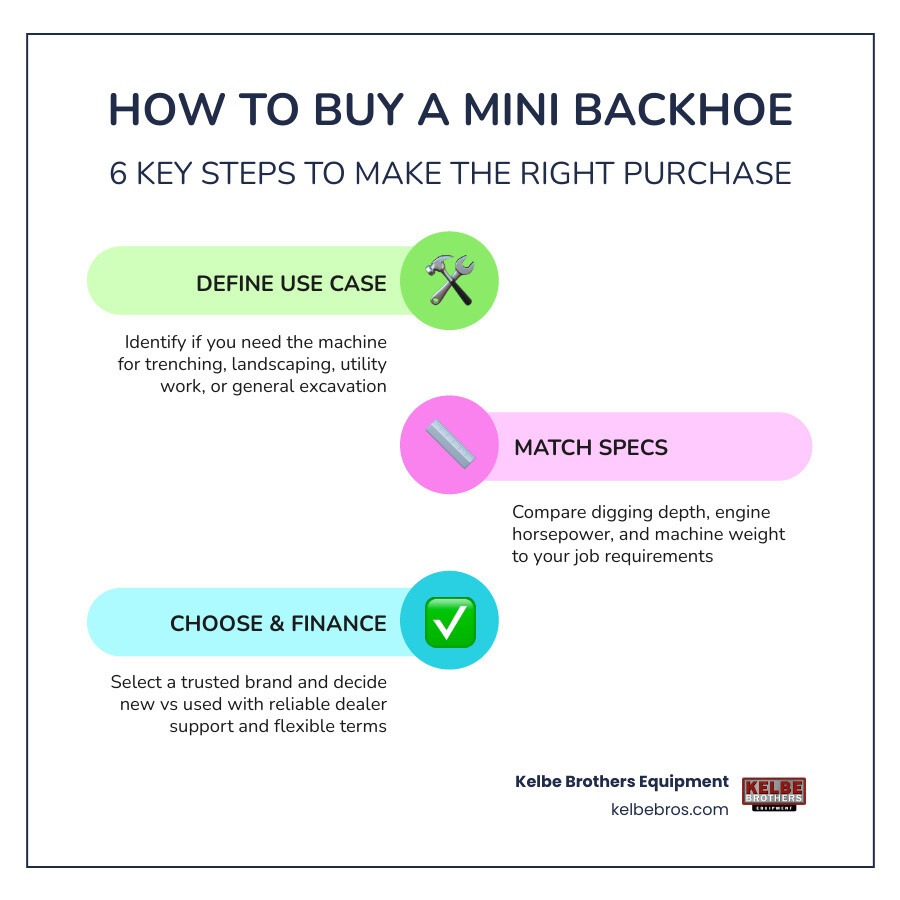
- Define your use case — trenching, landscaping, utility work, or general excavation
- Choose the right type — mini backhoe attachment, compact tractor backhoe, or mini excavator
- Match specs to your job — look at digging depth, engine horsepower, and weight
- Pick a trusted brand — New Holland, Takeuchi, and Hitachi are proven choices for reliability
- Decide new vs. used — new units offer warranties; used units can offer value if hours and history check out
- Consider financing and support — choose a dealer with local service, fast parts, and flexible terms
Compact equipment has become one of the most practical investments for construction professionals across Wisconsin. Mini backhoes are versatile, easy to transport, and capable of working in tight spaces where full-size machines simply can’t fit. Whether you’re digging trenches, clearing land, or tackling a utility project, the right compact machine keeps your crew moving and your schedule intact.
I’m Jeffrey J. Miller, President of Kelbe Brothers Equipment, and with over 70+ years of combined company experience helping Wisconsin contractors buy mini backhoes and other compact equipment, I understand what it takes to match the right machine to the right job. In the sections below, I’ll walk you through everything you need to make a confident purchase decision.
What is a Mini Backhoe and How Does It Differ?
To make an informed purchase, it helps to understand exactly what a mini backhoe is. A mini backhoe is a compact utility machine equipped with a front loader bucket and a rear-mounted digging arm (the backhoe). Some operators refer to dedicated small tractor-style units, while others are looking at attachments that hook up to existing machinery.
In the construction world, the term is often used interchangeably with other compact digging equipment. However, true backhoes feature a distinct dual-purpose design: they can push and scoop material from the front while digging deep trenches from the back. This dual functionality is why many operators choose to buy a mini backhoe rather than a single-purpose tool.
When evaluating your options, you’ll want to consider the overall machine weight, maneuverability, and hydraulic capacity. Traditional full-size backhoes are heavy, require large transport trailers, and can easily tear up sensitive turf. A mini backhoe, by contrast, is light enough to be towed behind a heavy-duty pickup truck and nimble enough to squeeze through residential gates. This makes them highly popular for backyard utility work, municipal landscaping in Green Bay, and tight commercial job sites in downtown Milwaukee.
Mini Backhoe vs. Mini Excavator
One of the most common points of confusion for buyers is deciding between a mini backhoe and a mini excavator. While both are exceptional at digging, they differ significantly in their operating footprint, swing boom capabilities, and mobility.
A mini excavator features a house (cab and engine) that rotates a full 360 degrees. This unlimited rotation allows the operator to dig in one spot and dump material directly behind them without moving the tracks. Mini excavators are highly specialized digging machines, typically weighing between 0.7 to 8.5 tons, making them ideal for confined spaces where you need to work parallel to walls or structures.
A mini backhoe, on the other hand, is built on a wheeled or tracked tractor-style chassis. The backhoe boom at the rear typically swings between 140 to 180 degrees. While you don’t get 360-degree rotation, you gain a highly versatile front-end loader. A backhoe can travel faster across a job site than an excavator, and it excels at backfilling, grading, and carrying heavy loads in its front bucket.
| Feature | Mini Backhoe | Mini Excavator |
| Cab Rotation | Fixed (Boom swings 140°–180°) | 360-degree continuous rotation |
| Front Functionality | Heavy-duty loader bucket for grading/scooping | Minor backfill blade only |
| Mobility & Speed | High travel speeds, highly mobile | Slower, optimized for stationary digging |
| Trenching in Tight Corners | Requires room to maneuver the chassis | Highly compact footprint, ideal for parallel trenching |
Key Features to Look For When You Buy Mini Backhoe
If you have decided to buy a mini backhoe or a highly comparable compact digging machine, you must look closely at the specifications sheet. Not all compact machines are engineered equally, and choosing the wrong specs can leave you underpowered on the job.
- Digging Depth: This is perhaps the most critical metric. You must ensure the boom can reach the depths required for your local utility codes. While some ultra-compact attachments dig to around 3 to 4 feet, high-quality professional units can easily reach depths of 6 feet or more.
- Engine Horsepower: Look for a reliable, clean-burning engine that delivers sufficient torque without excessive fuel consumption. Premium compact units often feature robust diesel engines designed to run all day under heavy hydraulic loads.
- Hydraulic Flow and Pressure: Your digging force and cycle times depend entirely on hydraulic performance. Ensure the machine provides enough gallons per minute (GPM) and PSI to handle tough clay, rocky soil, and heavy attachments without stalling.
- Mounting and Linkage: If you are buying an attachment rather than a dedicated tractor loader backhoe, look for universal mounting systems like the classic three-point linkage or skid steer quick-tach plates.
Top Equipment Options for Compact Excavation
At Kelbe Brothers Equipment, we believe in providing our customers with heavy-duty, reliable machinery built by industry-leading manufacturers. When you look to buy a mini backhoe or compact digging machine, you want brands that stand behind their engineering with excellent parts support and warranties.
Choosing the Right Brand to Buy Mini Backhoe
When navigating the compact market, several top-tier equipment categories stand out for their durability and performance on Wisconsin job sites:
- Takeuchi Compact Excavators: If your work primarily involves heavy digging in residential areas or tight commercial spaces, Takeuchi is a legendary choice. Their compact excavators allow operators to spin the cab safely without worrying about striking nearby walls, trees, or traffic. They provide massive breakout force and smooth, pilot-controlled hydraulics.
- New Holland Tractor Loaders Backhoes & New Holland Mini Excavators: New Holland is a powerhouse when it comes to versatile utility machines. Their tractor loader backhoes combine agricultural agility with construction-grade strength. If you need a machine that can grade a driveway, dig a trench, and load a dump truck all in the same afternoon, New Holland is a premier option. You can read more in our guide on The Best Small Backhoe Tractor Options for Your Property.
- Hitachi Compact Excavators: Known globally for their hydraulic efficiency and long-term durability, Hitachi compact machines are built to withstand the harshest digging conditions. They are highly favored by utility contractors who require precise control when digging around live gas and water lines.
Attachments That Expand Your Capabilities
One of the greatest benefits of modern compact equipment is its adaptability. By utilizing a quick-coupling system, you can transform your machine from a simple trencher into a multi-purpose Swiss Army knife on the job site.
- Hydraulic Thumb: If you are digging up concrete, clearing brush, or moving heavy rocks, a hydraulic thumb is an absolute game-changer. It acts as a mechanical thumb opposite your bucket, allowing you to grip and place awkward materials with precision.
- Trenching Buckets: These narrow buckets (often ranging from 9 to 18 inches) concentrate the machine’s digging power to cut clean, narrow trenches for conduit, water lines, or drainage pipes.
- Augers: Need to set fence posts or plant trees? Swapping your backhoe bucket for a high-torque hydraulic auger allows you to drill perfect vertical holes in seconds.
Key Considerations Before You Buy Mini Backhoe
Purchasing heavy machinery is a significant investment. To protect your bottom line, you must perform due diligence before signing on the dotted line.
- Machine Hours (For Used Equipment): If you are looking at used machines, check the hour meter. In the compact equipment industry, machines with 4,000 to 5,000 operating hours are generally considered to have moderate usage. However, a machine with higher hours that has been meticulously maintained can easily outperform a lower-hour machine that was neglected.
- Maintenance History: Always ask for service records. Look for evidence of regular oil and filter changes, hydraulic fluid flushes, and daily greasing. Pay close attention to the pivot pins, bushings, and swing post area — these are high-wear points on any backhoe or excavator.
- Dealer Support and Location: Never buy a machine from a dealer who cannot support you after the sale. If a hydraulic hose blows or a sensor fails on a Tuesday morning in Madison or Green Bay, you need a local dealer who can deliver parts or dispatch a service technician promptly. Buying from a local family-owned dealer like Kelbe Brothers ensures you get rapid response times and hassle-free service. To understand why local dealer expertise is so critical, check out our article on Why the Best Compact Backhoe Matters for Wisconsin Contractors.
Deciding Between Buying and Renting
Before you commit to a full purchase, it is highly beneficial to analyze your projected machine utilization.
If you have consistent, year-round projects that require excavation, buying a machine is highly cost-effective in the long run. It gives you immediate availability, builds equity in an asset, and allows your operators to become completely familiar with the machine’s controls.
However, if you only tackle trenching projects occasionally, or if you want to avoid the long-term costs of storage, transport, and preventative maintenance, renting is an incredibly smart alternative. Renting allows you to match the exact machine size to each specific project without tying up your capital. We break down this decision-making process in detail in our guide: Why a Backhoe Rental Might Be Your Best Option.
Frequently Asked Questions About Mini Backhoes
What is the maximum digging depth of a mini backhoe?
The maximum digging depth of a mini backhoe depends heavily on the machine’s size and configuration. Ultra-compact tractor attachments typically dig between 3 to 5 feet deep. Professional-grade compact backhoes and mini excavators can easily achieve digging depths of 6 to 12 feet, depending on the boom length and whether they are equipped with an extendable dipper arm.
Can I use mini backhoe attachments on skid steers?
Yes! Many manufacturers design backhoe attachments specifically for skid steers and compact track loaders such as the New Holland Skid Steer Loaders. These attachments utilize the standard quick-tach coupler and connect directly to the loader’s auxiliary hydraulic couplers, allowing you to operate the digging arm directly from the operator’s cab or an attached control station.
How do I maintain a compact backhoe?
Proper maintenance is the key to equipment longevity. You should conduct daily pre-start inspections, checking all fluid levels (engine oil, coolant, and hydraulic fluid) and looking for any signs of leaks. Grease all pivot points, cylinder pins, and the swing frame daily to prevent premature wear. Keep the radiator and hydraulic oil coolers clean, and regularly inspect the bucket teeth for wear, replacing them promptly to maintain digging efficiency.
Conclusion
Investing in the right compact equipment can transform your business, allowing you to take on more projects, work more efficiently, and reduce manual labor. Whether you decide to buy a mini backhoe, invest in a dedicated mini excavator, or utilize a flexible rental plan, partnering with a trusted local dealer is the ultimate key to your success.
At Kelbe Brothers Equipment, we have spent generations supporting Wisconsin contractors in Milwaukee, Madison, and Green Bay. We don’t just sell and rent machinery — we provide rapid parts delivery, expert service support, and flexible financing you need to keep your jobs moving forward.
Ready to find the perfect machine for your crew? Find Mini Excavators for Sale in Wisconsin or stop by one of our local showrooms today to speak with our experienced, hassle-free team!