




A high flow mulcher for skid steer is the most powerful way to clear dense brush, trees, and stumps in a single pass — without burning, chipping, or hauling debris.
Here’s what you need to know fast:
- What it does: Grinds vegetation into fine mulch using a rotating drum or disc, powered by your skid steer’s hydraulic system
- Flow required: 26–50 GPM at 3,000–4,000 PSI (high flow only)
- Horsepower needed: Minimum 75 HP; heavy-duty work needs 120+ HP
- What it can handle: Standing trees 4–6 inches routinely; up to 8–10 inches with the right machine
- How fast: 1–4 acres per day depending on vegetation density and machine flow rate
- Best for: Land clearing, fire mitigation, site prep, pasture reclamation
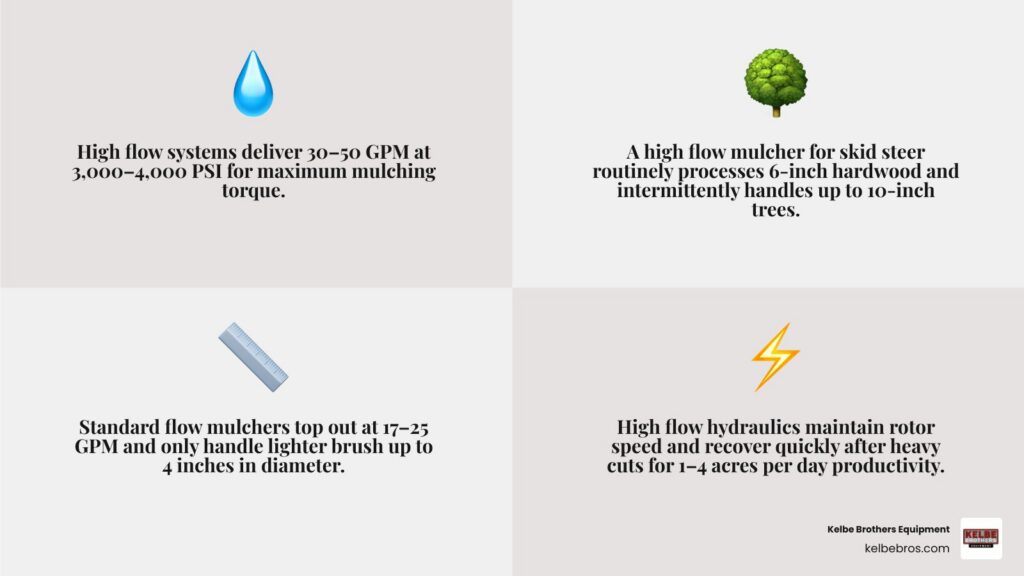
The difference between a standard flow and high flow mulcher is significant. Standard flow machines run at 17–25 GPM and handle lighter brush up to 4 inches. High flow machines push 30–50+ GPM and can process hardwood trees up to 8 inches in diameter routinely — and intermittently handle material up to 10 inches or more. That’s not a small gap in capability. It’s a completely different class of work.
For Wisconsin construction and land management professionals, downtime is the enemy. Choosing the wrong mulcher for your skid steer’s hydraulic output means sluggish performance, overheating, and premature wear — all of which kill your schedule.
I’m Jeffrey J. Miller, President of Kelbe Brothers Equipment, and I’ve spent years helping Wisconsin contractors match the right attachments — including high flow mulchers for skid steer — to the right machines for maximum uptime and productivity. In this checklist, I’ll walk you through everything you need to get it right the first time.
Understanding the High Flow Mulcher for Skid Steer
When we talk about a high flow mulcher for skid steer, we are entering the heavyweight division of land clearing. Standard flow hydraulics are great for post-hole diggers or light buckets, but mulching is a high-demand application that requires immense hydraulic energy. High flow systems typically operate in the 30–50 Gallons Per Minute (GPM) range, often at pressures between 3,000 and 4,000 PSI.
The reason this matters is torque and recovery time. When you push a mulcher into a 6-inch oak, the rotor wants to slow down. High flow hydraulics provide the “muscle” to keep that rotor spinning and the “stamina” to recover speed quickly after a heavy cut. This level of efficiency is why a forestry mulcher for your skid steer is a game changer for land clearing.
In Wisconsin, where we deal with everything from soft pines to dense hardwoods, having that extra hydraulic overhead ensures you aren’t just “nibbling” at the brush. Whether you are prepping a site in Milwaukee or clearing a lot in Green Bay, skid steer services matter for your construction project, and the right mulcher is the heart of that service.
Selecting the Right High Flow Mulcher for Skid Steer
Choosing a mulcher isn’t just about picking the biggest one on the lot. You have to decide between two primary architectures: drum and disc.
- Drum Mulchers: These feature a horizontal rotor covered in teeth. They are the “gold standard” for creating a finished look. They grind material thoroughly and are safer in populated areas because they generally discharge material downward.
- Disc Mulchers: These use a large, high-speed vertical disc. They are incredibly fast and can “flick” trees out of the way, but they leave a coarser finish and require more room for debris discharge.
You also need to consider cutting width. Most high flow units range from 60 to 72 inches. While a 72-inch model covers more ground, it also requires more power to maintain rotor speed. Always verify that your machine’s GPM matches the attachment’s requirements.
Finally, look at the teeth. Carbide teeth are durable and ideal for rocky Wisconsin soil or hidden stumps, as they resist impact damage. Chisel or claw teeth are sharper and cut faster through green wood but require more frequent sharpening or replacement if they hit a rock.
Key Features and Specifications for Maximum Power
To maximize the performance of your high flow mulcher for skid steer, you need to look under the hood of the attachment itself. It isn’t just a spinning log of steel; it’s a precision-engineered tool.
One critical feature is the variable displacement motor. These smart motors automatically adjust the rotor’s torque and speed based on the load. When you hit a thick trunk, the motor shifts to high torque; when clearing light brush, it shifts to high speed. This keeps your productivity high without stalling the engine.
| Feature | Drum Mulcher | Disc Mulcher |
| Max Material Size | 8-10 inches | 14+ inches (cutting) |
| Finish Quality | Fine mulch | Coarse chunks |
| Safety/Discharge | Controlled (Down) | Wide (Side/Front) |
| Best Application | Finishing/Residential | Bulk clearing/Pasture |
Other “must-haves” include bite limiters, which are rings on the drum that prevent the teeth from taking too big of a “bite” at once, preventing stalls. A visible pressure gauge is also vital; it allows the operator to see exactly how hard the motor is working, helping them find the “sweet spot” for ground speed.
Maximizing Performance with a High Flow Skid Steer Mulcher
Performance is measured in acres and inches. A high-spec machine with an extra-pressure high flow package can routinely handle 8-inch trees and even push into 10-inch territory intermittently. On average, a skilled operator can clear 1 to 4 acres per day.
The secret to hitting that 4-acre mark isn’t just going fast; it’s managing material density. If you’re working in thick buckthorn or cedar, you’ll need to slow your ground speed to let the drum process the material. This is where compact track loaders maximize productivity; their stability and traction allow for smoother passes than wheeled machines in soft or uneven Wisconsin terrain.
If you have a short-term project, skid steer rental in Wausau, WI is your project’s best solution. Renting allows you to get a high-flow-ready machine and a matched mulcher without the long-term capital investment.
Machine Compatibility and Performance Ratings
Your high flow mulcher for skid steer is only as good as the machine pushing it. At Kelbe Brothers, we focus on brands that provide the hydraulic “grunt” needed for these tasks.
For New Holland, the New Holland Skid Steer Loaders and New Holland Compact Track Loaders are excellent candidates when equipped with high flow packages. These machines are engineered to handle the heat and pressure of constant mulching. Similarly, Takeuchi Compact Track Loaders are legendary in the forestry industry for their cooling capacity and hydraulic reliability.
When matching a machine, look for:
- Horsepower: 75 HP is the floor; 90–120 HP is the “Goldilocks” zone for high flow mulching.
- Lift Capacity: High flow mulchers are heavy, often weighing between 2,250 lbs and 3,100 lbs. Your machine must have the Rated Operating Capacity (ROC) to carry this weight safely, especially when the loader arms are extended.
- Cooling: Mulching generates immense heat. Ensure your machine has a clean radiator and, if possible, an auxiliary oil cooler on the mulcher itself.
Proper operation is key to longevity. We always recommend reviewing CTL SSL operation tips to ensure you aren’t “dead-heading” the hydraulics or overworking the engine.
Operating a High Flow Mulcher for Skid Steer Safely
Safety isn’t an option; it’s a requirement. When a drum is spinning at 2,000+ RPM, it can turn a piece of wood into a projectile in a split second. Never operate a mulcher without a 1/2-inch polycarbonate windshield. Standard glass will shatter instantly.
Beyond the cab, pay attention to your hydraulic setup. High flow attachments usually use a 3-hose or 5-hose system. The third (or fifth) hose is a “case drain” line. This is a low-pressure return line that protects the mulcher’s motor from internal pressure spikes. If you plug in a high flow mulcher without the case drain attached, you will likely blow the seals in the motor before you finish your first tree.
Also, keep an eye on your tracks or tires. Clearing land means driving over sharp stumps and debris. Following skid steer tire and track maintenance tips will save you from an expensive flat in the middle of a job site.
Maintenance and Operational Best Practices
A high flow mulcher for skid steer is a “wear-and-tear” machine by design. It is literally designed to beat itself against wood all day. Therefore, maintenance is your best friend.
Daily maintenance should include:
- Greasing: High-speed bearings need fresh grease daily to push out contaminants and heat.
- Tooth Inspection: Check for cracked or missing teeth. A single missing tooth can throw the entire drum out of balance, leading to vibration that can destroy bearings and hydraulic seals.
- Debris Clearing: Clean out the “hiding spots” around the hydraulic motor and hose routings. Dry leaves and wood dust near a hot motor are a fire hazard.
For long-term reliability, follow attachment maintenance best practices. When evaluating used mulchers, ask about the service history and tooth life of the unit.
Frequently Asked Questions
What is the difference between drum and disc mulchers?
Drum mulchers use a horizontal cylinder and are best for producing a fine, finished mulch and working in tight spaces or near buildings. Disc mulchers use a large vertical disc and are built for speed and bulk clearing, capable of felling trees up to 14 inches in diameter, though they leave a rougher finish.
How many acres can a high flow mulcher clear per day?
Most operators can clear between 1 and 4 acres per day. This varies wildly based on the density of the vegetation (thick buckthorn vs. spaced-out pines), the GPM of your machine, and the terrain’s slope.
Is a high flow mulcher worth the investment for land clearing?
Absolutely. It replaces the need for a crew with chainsaws, a chipper, and a haul-off truck. By grinding the material back into the soil, you enrich the earth and create a natural barrier that prevents immediate weed and brush regrowth. It is a single-machine solution for a multi-stage problem.
Conclusion
At Kelbe Brothers Equipment, we know that Wisconsin land clearing requires tough tools and even tougher machines. Whether you are looking for a high flow mulcher for skid steer to add to your fleet or need a high-performance Takeuchi or New Holland machine to power one, we are here to help.
As a fourth-generation, family-owned business, we pride ourselves on providing the rapid response and hassle-free service that local contractors need to stay profitable. From Milwaukee to Green Bay and everywhere in between, we have the equipment attachments and the expertise to get your job done right.
Ready to take your land clearing to the next level? Explore our full range of attachments or stop by one of our locations today. We’ve been supporting Wisconsin’s construction industry since 1953, and we’re ready to help you power through your next project.