




A construction excavator is a versatile heavy equipment machine designed to dig, lift, and move large amounts of material on construction sites. These powerful hydraulic machines serve as the backbone of most construction projects, from residential foundations to major infrastructure development.
Quick Guide to Construction Excavators:
| Type | Size Range | Best For | Popular Brands |
| Mini | Under 6 tons | Residential, tight spaces | Takeuchi, New Holland |
| Compact | 6-10 tons | Urban projects, utilities | Takeuchi, Hitachi |
| Standard | 10-30 tons | General construction | Link-Belt, Hitachi |
| Large | 30+ tons | Mining, heavy earthwork | Hitachi, Link-Belt |
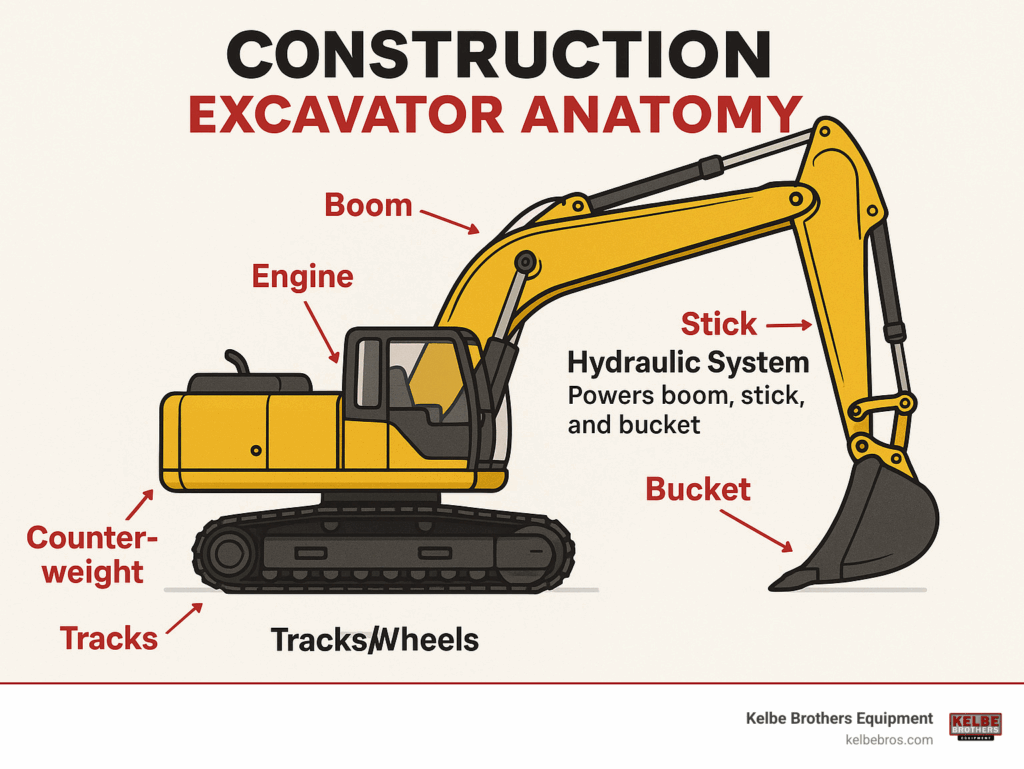
When you see these powerful machines on a jobsite, you’re witnessing the culmination of over 150 years of engineering evolution. Modern construction excavators combine remarkable hydraulic power with precision control systems, allowing operators to move tons of earth with surgical accuracy. They feature a boom, stick, and bucket assembly mounted on a rotating house, all supported by either tracks or wheels for mobility across challenging terrain.
What truly sets today’s construction excavators apart is their versatility. With the right attachments—from simple buckets to specialized grapples, hammers, and augers—a single machine can transition between digging trenches, breaking concrete, lifting pipes, and loading trucks in minutes.
I’m Jeffrey J. Miller, President of Kelbe Brothers Equipment, where I’ve guided our company through decades of industry changes while maintaining our commitment to providing Wisconsin contractors with the finest construction excavator options from Hitachi, Link-Belt, New Holland, and Takeuchi.
Understanding Construction Excavators
When you see a construction excavator on a jobsite, you’re looking at a marvel of hydraulic engineering. These impressive machines harness the power of pressurized fluid to move earth, tear down structures, and lift heavy materials with remarkable precision. Unlike their ancestors who relied on complicated systems of cables and pulleys, today’s hydraulic excavators deliver the best power and versatility that contractors have come to depend on.
What truly sets a construction excavator apart is its ability to rotate a complete 360 degrees while staying planted on its undercarriage. This full-rotation capability means operators can dig, load, and dump material without constantly repositioning the entire machine—a game-changer for efficiency, especially on tight jobsites where space comes at a premium.
How a construction excavator works
At the heart of every construction excavator is its diesel engine, the powerhouse that drives hydraulic pumps to pressurize fluid throughout the machine. This pressurized fluid travels through a network of control valves that direct the flow based on the operator’s commands.
When an operator moves a joystick inside the cab, they’re actually controlling these valves with remarkable precision. Push the right joystick forward, and hydraulic fluid rushes to the boom cylinder, causing it to lift. Pull it back, and the boom lowers with controlled power. It’s this direct connection between operator input and hydraulic response that gives these machines their reputation for precision.
The swing motor—the component responsible for that signature 360-degree rotation—uses hydraulic pressure to turn a large gear that meshes perfectly with the swing circle attached to the undercarriage. This clever system allows the entire upper structure to rotate smoothly while maintaining rock-solid stability, even when handling heavy loads.
Today’s construction excavators feature sophisticated multi-circuit hydraulic systems that can perform several operations simultaneously. This means operators can combine movements—swinging while raising the boom and extending the stick—for fluid, efficient operation that keeps projects moving forward.
Core components of a construction excavator
Every construction excavator consists of several key components working together in perfect harmony:
Cab: The operator’s command center features ergonomic seating, intuitive joystick controls, and digital displays that provide critical information at a glance. Modern cabs are designed with comfort in mind, offering climate control, reduced noise levels, and excellent visibility to help operators stay productive during long shifts.
Boom: This long arm extends from the main body, providing the reach and lifting height needed for various tasks. Boom designs vary based on application, with standard, long-reach, and offset configurations available to match specific jobsite requirements.
Stick: Sometimes called the arm, this section connects the boom to the bucket. The stick’s length directly determines how deep the excavator can dig and how far it can reach—crucial measurements when selecting the right machine for your project.
Bucket: This is where the actual digging happens. Buckets come in countless sizes and styles, each optimized for specific materials and tasks. From narrow trenching buckets to wide clean-up buckets, selecting the right one dramatically impacts productivity.
Counterweight: That heavy block at the rear of the machine isn’t just for show—it’s carefully calculated to balance the extended boom and loaded bucket, preventing the excavator from tipping during operation.
Tracks or Wheels: The undercarriage system provides mobility and stability. At Kelbe Brothers Equipment, we help customers choose between tracked and wheeled models based on their specific needs.
| Feature | Tracked Excavators | Wheeled Excavators |
| Stability | Superior on uneven terrain | Good on flat, solid surfaces |
| Ground Pressure | Lower (better for soft soil) | Higher (can damage finished surfaces) |
| Mobility | Slower, but can steer difficult terrain | Faster on roads, can drive between sites |
| Maneuverability | Excellent in tight spaces | Good with articulated steering |
| Surface Impact | Minimal damage to soft ground | Can damage unpaved surfaces |
| Transport | Requires trailer for road movement | Can drive on roads independently |
| Applications | Ideal for off-road construction | Perfect for urban work and road projects |
Here at Kelbe Brothers Equipment, we understand that choosing the right construction excavator configuration makes all the difference in your project’s success. That’s why our team takes the time to understand your specific needs—from soil conditions to space constraints—before recommending equipment. Whether you’re looking at Hitachi excavators for heavy earthmoving, compact Takeuchi excavators for precision work, or versatile Link-Belt excavators for general construction, we’ll help you find the perfect match for your jobsite challenges.
Construction Excavator Types & Sizes
The world of construction excavators is diverse, with machines ranging from compact units weighing less than 2 tons to massive mining excavators exceeding 90 tons. Understanding the different types and their ideal applications will help you select the right machine for your specific needs.
Mini & Compact class
Mini and compact excavators are the nimble heroes of residential construction, landscaping, and utility work. These machines shine in tight spaces where their larger cousins simply can’t fit.
Takeuchi compact excavators set the gold standard in this category. I’ve watched contractors light up when they realize these machines—ranging from 2,370 to 15,850 pounds—can squeeze through standard backyard gates while still packing serious digging power. The zero-swing models are particularly impressive, allowing you to work right against walls without that heart-stopping moment when your counterweight nearly clips a structure.
Speaking of tight spaces, there’s something almost magical about watching a zero-swing excavator dance between obstacles in urban environments. They can work alongside busy roads without blocking traffic or operate between buildings with just inches to spare. For homeowners looking at pool installations or foundation repairs, these machines are absolute game-changers.
New Holland mini excavators bring similar versatility to the table with their 1.7 to 6-ton lineup. What I love about these smaller machines is how gently they treat established landscapes. Their rubber tracks distribute weight so evenly that they can often work on finished lawns without leaving the site looking like a battlefield. This makes them perfect for projects where minimizing collateral damage matters as much as getting the job done.
Standard & Large class
When your project calls for moving serious earth, standard and large excavators step up to the plate. These powerful machines form the backbone of major construction projects, quarry operations, and large-scale earthworks.
Hitachi excavators have earned their stripes in the toughest conditions worldwide. Their medium and large models (ranging from 13 to 90 tons) feature the TRIAS hydraulic system that optimizes pump flow for improved fuel efficiency, without sacrificing an ounce of power. I’ve seen these machines continue performing flawlessly in conditions that would sideline lesser equipment.
Link-Belt excavators blend American engineering with Japanese hydraulic technology for exceptional reliability. Their 8 to 80-ton lineup includes specialized models for everything from general construction to mass excavation. The difference becomes clear when you’re moving earth by the thousands of cubic yards—these machines keep producing hour after hour.
These larger excavators transform impossible tasks into everyday work. A mid-size Hitachi excavator can easily handle bucket capacities of 1-2 cubic yards and dig beyond 20 feet deep, while the larger models move more than 5 cubic yards per bucket and reach depths exceeding 30 feet. This capability makes them essential for mass earthmoving, deep foundations, quarry operations, major pipe installations, and large-scale demolition.
Specialized variants
Beyond standard configurations, several specialized construction excavator variants tackle unique challenges that would stump conventional machines:
Long-reach excavators extend your capabilities—literally—with booms and sticks that can reach across rivers for dredging or down steep embankments for slope finishing. These machines turn previously inaccessible areas into workable spaces, making them invaluable for environmental restoration and specialized excavation.
Demolition excavators come reinforced like tanks and equipped with attachments that can slice through steel and pulverize concrete. Their multi-section booms provide the flexibility needed when dismantling tall structures piece by precise piece—a fascinating blend of raw power and surgical precision.
Amphibious excavators perform what seems like magic, operating in wetlands and shallow water where conventional machines would disappear into the muck. Their pontoon-style undercarriages or extra-wide tracks “float” on surfaces that wouldn’t support a person walking, opening up previously impossible work environments.
Wheeled excavators offer the best of both worlds—excavator versatility with road-friendly mobility. Hitachi wheel loaders complement these machines perfectly, creating an efficient team for material handling across multiple locations. The ability to drive between job sites without a trailer makes them ideal for urban utility work and road construction, where mobility matters.
At Kelbe Brothers Equipment, we’re proud to offer Wisconsin contractors this full spectrum of construction excavators from industry leaders like Hitachi, Link-Belt, New Holland, and Takeuchi. With locations in Milwaukee, Madison, Green Bay, Butler, and De Pere, we’re never far from your job site—because we know in construction, time is always of the essence.
Key Features & Modern Technologies
Today’s construction excavators aren’t just digging machines—they’re sophisticated pieces of engineering that combine raw power with smart technology. These innovations have transformed what your crew can accomplish on the jobsite, making everything from precision grading to material handling faster and more efficient.
Attachments that transform a construction excavator
What makes modern construction excavators truly shine is their incredible versatility. With hydraulic quick couplers, your operator can switch attachments in minutes without leaving the cab, turning one machine into a multi-functional workhorse that can handle almost any task you throw at it.
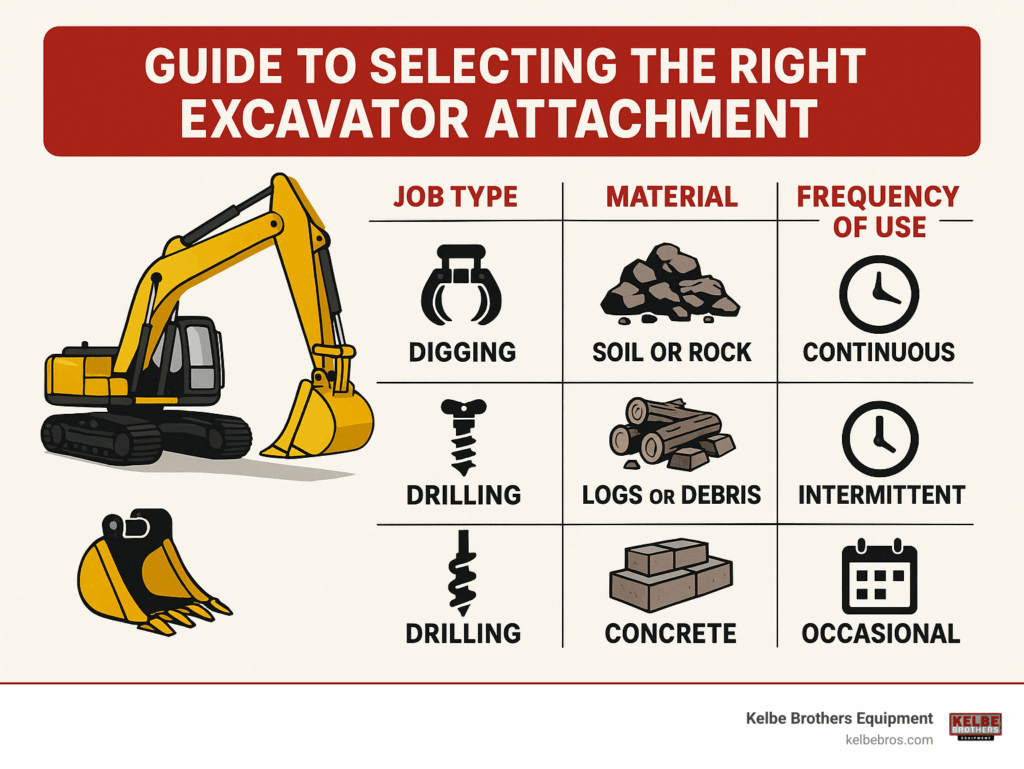
The right attachment can completely transform what your excavator can do. Buckets come in various styles to match specific materials—from general-purpose buckets for everyday digging to specialized trenching buckets that make clean, precise utility cuts. When you’re handling irregular materials like storm debris or landscaping materials, grapples give you the control to pick up exactly what you need and nothing more.
Need to drill holes for fence posts or foundation piers? Augers turn your excavator into a powerful drilling machine. For demolition work, hydraulic breakers make quick work of concrete and asphalt that would otherwise take days to remove manually.
Working with larger objects becomes much easier with thumbs that work alongside your bucket, just like your own thumb works with your fingers to grip objects securely. For tough ground conditions, rippers break up hard, compacted soil or frozen ground that would normally slow your project down. In tight spaces where traditional compaction equipment can’t reach, compactors ensure proper soil density in trenches or on slopes.
Perhaps the most game-changing attachment is the tilt rotator, which allows your bucket to rotate 360 degrees and tilt up to 45 degrees in any direction. This remarkable flexibility means you can dig around obstacles, grade complex contours, and place materials with surgical precision—all without repositioning the machine.
Digital aids & efficiency boosters
The technology inside today’s cab is just as impressive as the hydraulics doing the heavy lifting. Modern construction excavators now come equipped with digital systems that boost productivity while making operators’ lives easier.
GPS grade control systems have revolutionized earthwork by providing real-time positioning data to operators. Instead of constantly checking grades with traditional surveying methods, operators can see exactly where their bucket is relative to the desired grade on an in-cab display. This technology reduces over-excavation and rework while boosting productivity by up to 40%—meaning you finish jobs faster and more accurately.
Fleet managers love the insights provided by telematics systems, which remotely track everything from machine location and operating hours to fuel consumption and diagnostic codes. This wealth of information helps optimize maintenance schedules and reduce costly downtime. At Kelbe Brothers, our service team uses this data to spot potential issues before they become expensive problems.
For contractors concerned about fuel costs and environmental impact, hybrid systems offer an innovative solution by combining diesel engines with electric components. These systems capture energy during swing deceleration and reuse it during peak power demands, cutting fuel consumption and emissions without sacrificing performance.
Your bottom line benefits from auto-idle and auto-shutdown features that reduce fuel consumption by automatically lowering engine RPM during periods of inactivity or shutting down the engine after a predetermined idle time. These small efficiencies add up to significant savings over the life of the machine.
Jobsite safety gets a major upgrade with safety camera systems that provide operators with a 360-degree view around the machine. By eliminating blind spots, these systems reduce the risk of accidents and give operators confidence when working in congested areas. Some advanced systems even include object detection technology that alerts operators when people or obstacles enter the machine’s working radius.
The operator experience has improved dramatically with comfort features like fully adjustable seats, climate control, reduced noise levels, and ergonomic controls. These might seem like luxury items, but they significantly reduce operator fatigue during long shifts, maintaining productivity and safety throughout the workday.
At Kelbe Brothers Equipment, we help Wisconsin contractors find the right construction excavators with technology packages that match their specific needs and budget. Whether you’re looking at Takeuchi excavators with their renowned reliability, versatile New Holland mini excavators, powerful Link-Belt excavators, or innovative Hitachi excavators, we’ll help you select equipment that gives your team the technological edge they need to succeed.
Applications Across the Jobsite
The humble construction excavator isn’t just a one-trick pony – it’s more like the Swiss Army knife of the construction world. From the moment ground breaks on a project until the final landscaping touches, these versatile machines are the unsung heroes of virtually every jobsite.
When you first arrive at a fresh construction site, you’ll likely see a construction excavator clearing the way forward. These machines excel at site preparation – stripping away topsoil, removing unwanted vegetation, and creating properly graded building pads with perfect drainage slopes. What might take a crew of workers days to accomplish, a skilled operator can knock out in hours.
Need utilities installed? Construction excavators shine at trenching work, creating clean, precise channels for everything from water lines to fiber optic cables. Their specialized trenching buckets cut through soil with surgical precision, ensuring your utility lines rest at exactly the right depth and grade.
When it comes to foundation digging, nothing beats the accuracy of a modern construction excavator. Whether you’re building a modest residential foundation or excavating for a massive commercial structure, these machines can dig to exact specifications, ensuring your building stands on a properly prepared base.
On busy job sites, material handling becomes a critical workflow component. Construction excavators seamlessly transition from digging to lifting pipes, placing rip-rap, or loading trucks. For maximum efficiency, many of our Wisconsin customers pair their Hitachi excavators with Hitachi wheel loaders to create a complete material handling system that keeps projects moving forward without delays.
The versatility doesn’t stop there. In forestry operations, specially equipped construction excavators clear land and remove stubborn stumps with ease, maneuvering through difficult terrain where other machines would struggle. For utility installation, they not only dig the trenches but also help place pipes and backfill with precision.
Drive past any roadwork project, and you’ll likely spot a construction excavator handling everything from initial grading to creating drainage ditches and installing culverts. The wheeled variants are particularly valuable here, able to travel between work zones without damaging finished road surfaces.
When the heavy construction wraps up, construction excavators shift gears to handle landscaping duties – creating natural-looking contours, digging holes for trees, and placing decorative boulders with surprising delicacy. And when Wisconsin winters arrive, many of our customers equip their excavators with snow-handling attachments, changing them into powerful snow removal machines for large areas.
Industries that rely on construction excavators
While we most often see them on construction sites, construction excavators have become essential across numerous industries throughout Wisconsin.
The construction industry remains the primary user, with excavators handling earthmoving tasks on everything from home builds to massive commercial developments. Their adaptability makes them indispensable for projects of all sizes.
In mining operations, specially designed excavators extract materials and maintain access routes under demanding conditions. Their robust construction stands up to the punishment of continuous operation in harsh environments.
Wisconsin’s agricultural sector has increasingly accepted construction excavators for creating drainage systems, building irrigation ponds, and handling materials around large farming operations. The precision control allows farmers to shape their land exactly as needed for optimal production.
Our municipal services customers rely heavily on excavators for maintaining water and sewer systems, managing stormwater infrastructure, and completing public works projects efficiently. The versatility of a single machine helps municipalities stretch their equipment budgets further.
Perhaps most satisfying is seeing construction excavators used for environmental restoration work. The same machines that can move mountains of earth can also delicately reshape stream banks, create wetland features, and implement erosion control measures that help heal damaged landscapes.
At Kelbe Brothers Equipment, we understand that different projects demand different machines. That’s why we offer flexible rental equipment options, allowing you to access specialized construction excavators for short-term needs without the long-term commitment of ownership. Whether you need a compact Takeuchi excavator for a backyard project or a powerful Link-Belt excavator for major earthmoving, we’ve got you covered across Wisconsin.
Choosing, Operating & Maintaining Your Excavator
Finding the perfect construction excavator for your needs isn’t just about horsepower and bucket size—it’s about matching the machine to your unique challenges. At Kelbe Brothers Equipment, we’ve spent nearly a century helping Wisconsin contractors make these crucial decisions.
Choosing the right excavator
When selecting an excavator, think of it like choosing a work partner—you need the right fit for the job. Machine sizing is your starting point. Too small, and you’ll struggle with heavy tasks and waste valuable time. Too large, and you’re burning extra fuel while paying for capacity you don’t need. Consider your typical digging depth, reach requirements, and the heaviest materials you’ll lift.
The ground beneath your tracks matters too. Soil conditions at your typical job sites should influence your choice—soft, muddy terrain might call for wider tracks to prevent sinking, while rocky ground demands more robust undercarriage components. Working in tight urban spaces? A zero-tail-swing model might be essential to avoid damaging nearby structures.
Don’t overlook transport logistics. That perfect excavator won’t help if you can’t legally move it between job sites. Machines exceeding certain weight and width limits require special permits and transport equipment, costs that can add up quickly for contractors who move frequently.
For those whose needs change from project to project, our excavator rental fleet offers flexibility without long-term commitment. And if you’re watching your budget but need reliable performance, our selection of used construction equipment for sale includes thoroughly inspected machines with plenty of productive hours ahead.
Safety essentials when running a construction excavator
Safety isn’t just about avoiding accidents—it’s about creating a workplace where everyone goes home in the same condition they arrived.
Always start with proper personal protective equipment. Hard hats, high-visibility clothing, safety glasses, and steel-toed boots aren’t just recommendations—they’re your first line of defense against jobsite hazards.
Be mindful of your swing radius. Today’s excavators often include cameras and proximity sensors, but technology should supplement—not replace—good situational awareness. Use spotters in congested areas, and always check your surroundings before swinging.
Trench collapse remains one of construction’s deadliest hazards. A single cubic yard of soil weighs as much as a car—enough to cause fatal injuries in seconds. Never dig trenches deeper than five feet without proper shoring, sloping, or trench boxes.
Before maintenance, follow proper lock-out/tag-out procedures. Remove the key, engage safety locks, and properly tag the machine. It only takes a moment to prevent a tragedy.
And always, always call before you dig. Underground utility strikes can cause service disruptions, expensive repairs, and potentially life-threatening situations. Modern utilities are often plastic and don’t register on magnetic locators, making professional utility location services essential.
Maintenance checklist for peak uptime
The most powerful excavator becomes worthless when it’s broken down. Regular maintenance isn’t just good practice—it’s the foundation of profitability.
Daily inspections form your first line of defense against unexpected downtime:
- Check all fluid levels before startup
- Look for hydraulic leaks around hoses and fittings
- Examine tracks or tires for damage and proper tension
- Clear debris from the radiator and coolers
- Grease pivot points according to manufacturer’s guidelines
- Inspect bucket teeth and edges for wear
- Test all safety systems, lights, and cameras
Following the manufacturer’s service intervals prevents small issues from becoming major repairs. Our parts department stocks genuine OEM components for Hitachi excavators, Link-Belt excavators, New Holland mini excavators, and Takeuchi excavators, ensuring you get the right parts the first time.
Different components have different service needs. Engine oil might need changing every 250-500 hours, while hydraulic filters typically last 500-1000 hours, and hydraulic oil can go 2000-4000 hours depending on conditions and contamination.
Productivity tips with a construction excavator
Maximizing productivity isn’t about working harder—it’s about working smarter with the right techniques.
Take advantage of your excavator’s work modes. Modern machines from manufacturers like Hitachi and Takeuchi offer different power settings that balance performance and fuel efficiency. Use Economy for light grading, Standard for general digging, and Power only when moving heavy material or breaking through tough ground.
Position your trucks strategically for loading—typically at a 45-90 degree angle to minimize swing time. This simple adjustment can add several loads per hour to your production rate.
Maintain the optimal bench height for your machine, usually about track height or slightly higher. This positioning gives you the best combination of digging force and cycle time while minimizing fuel consumption.
Match your bucket to your material. Using an oversized bucket in hard clay or rock actually reduces productivity by overloading the hydraulic system. Sometimes, a smaller bucket moves more material per hour simply because it allows faster cycles.
Modern technology can dramatically boost efficiency. Grade control systems reduce over-excavation and rework, while telematics help managers identify opportunities to improve utilization and reduce idle time.
At Kelbe Brothers Equipment, we don’t just sell and rent excavators—we partner with Wisconsin contractors to ensure they get the most from every machine. Whether you need equipment, parts, service, or just some friendly advice, our team is ready to help with the hands-on experience that only comes from four generations in the construction equipment business.
RC Toys vs. The Real Machines
The fascination with construction excavators extends far beyond professional operators to hobbyists and children alike. Those miniature remote-controlled (RC) excavator toys you might see at the store? They provide an accessible way to experience the thrill of operating these powerful machines without needing a contractor’s license.
High-quality RC excavators like the Kolegend 1:14 scale model capture the imagination with surprisingly authentic functionality. With 22 channels of control, metal shovels that can actually dig, independently moving arms, and that signature 360-degree rotation, these sophisticated toys deliver a genuine taste of excavator operation. The Kolegend RC excavator can be controlled from up to 100 feet away—plenty of distance for backyard “construction projects”—and offers about 30 minutes of playtime per charge, just enough time to dig a few impressive holes before dinner.
While these models might look like simple toys, they serve several valuable purposes that bridge the gap between play and professional equipment:
Educational Value: There’s something magical about watching a child understand how an excavator’s boom, stick, and bucket work together after playing with an RC model. These toys help both kids and adults grasp the basic mechanics and operations that make real construction excavators so effective. They demonstrate concepts like hydraulic movement, machine balance, and the coordination required to move earth efficiently.
Skill Development: Have you ever noticed how quickly kids master video game controls? Operating RC excavators builds similar hand-eye coordination, spatial awareness, and fine motor skills. These same fundamental skills translate surprisingly well to real equipment operation, making RC models a low-stakes introduction to machine control without the pressure of sitting in a real cab.
Professional Training Aid: Some construction schools and training programs actually use sophisticated RC models as preliminary training tools. It’s a logical stepping stone—master the miniature version before advancing to full-size equipment simulators and actual machines. The principles remain remarkably similar, just at different scales.
Hobby Enthusiasm: For many adults, collecting and operating scale model construction equipment becomes a rewarding weekend hobby. It connects them to the industry even if they don’t operate Takeuchi excavators or Hitachi excavators professionally. The attention to detail in modern RC models can be truly impressive, with working lights, authentic sounds, and realistic weathering.
Of course, the differences between RC models and real construction excavators are substantial:
| Feature | RC Excavator | Real Construction Excavator |
| Scale | 1:14 to 1:50 typical | Full size |
| Weight | 5-20 pounds | 3,800-180,000+ pounds |
| Power Source | Electric battery | Diesel engine |
| Operating Time | 30-60 minutes per charge | 8-10 hours per fuel tank |
| Control System | Remote transmitter | In-cab joysticks and pedals |
| Lifting Capacity | Ounces to pounds | Tons |
| Cost | $50-$500 | $30,000-$500,000+ |
| Maintenance | Battery charging, occasional cleaning | Comprehensive daily and scheduled service |
When you’re ready to graduate from toys to the real thing, Kelbe Brothers Equipment has you covered. Our excavator rental options provide access to professional-grade machines without the commitment of purchase, perfect for those “I’ve always wanted to try operating one” moments or specific project needs. And when you’re ready to make a more permanent commitment, our used equipment inventory includes well-maintained Link-Belt excavators, New Holland mini excavators, and other quality machines at various price points.
For those interested in learning more about how real excavators work, the Hydraulic Excavator Wikipedia page provides fascinating insights into the history and technical development of these machines.
After all, there’s nothing quite like upgrading from a 1:14 scale model to the real thing. Just remember—the holes you dig with the full-size version tend to be a bit more permanent than those backyard RC projects!
Frequently Asked Questions about Construction Excavators
What size construction excavator do I need for my project?
Finding the right construction excavator for your job doesn’t have to be complicated. Think of it like buying shoes—too small and you’ll be uncomfortable, too large and you’ll waste money while making the job harder.
Start by measuring the deepest point you’ll need to dig, then add a couple feet for good measure. A residential foundation might need only 8-10 feet of depth, while utility work could require 15+ feet. Next, consider how far you need to reach—will you be digging close to the machine, or stretching over obstacles?
The material you’re moving matters too. Clay and rock put more strain on equipment than loose soil, potentially requiring a larger machine. And don’t forget about your workspace—I’ve seen plenty of contractors realize too late that their equipment can’t fit through access points or operate in tight spaces.
For most residential projects and landscaping work, a mini excavator under 6 tons will handle the job beautifully. Our Takeuchi excavators and New Holland mini excavators are perfect for these applications. Medium-sized commercial jobs typically call for compact excavators in the 6-10 ton range, while serious earthmoving and commercial development usually requires mid-size machines from 10-30 tons. Our Link-Belt excavators and Hitachi excavators excel in these categories.
For major infrastructure or mining operations, you’ll want to consider our large excavators over 30 tons. These powerhouses from Hitachi and Link-Belt can move mountains of material efficiently.
Not sure which machine fits your needs? Our team at Kelbe Brothers has been matching Wisconsin contractors with the right equipment since 1927—we’re happy to walk you through the options.
How often should a construction excavator be serviced?
Taking care of your construction excavator is like maintaining your health—prevention is always easier than a cure. A good maintenance routine starts before you even turn the key each morning.
Begin each day with a walk-around inspection: check fluid levels, look for leaks under the machine, and inspect hoses for wear. Make sure tracks are properly tensioned (too loose and they could derail; too tight and you’ll accelerate wear). Don’t forget to grease pivot points according to the manufacturer’s recommendations—this simple step can dramatically extend component life.
For regular service intervals, think of it as your excavator’s routine checkups. Engine oil and filters typically need changing every 250-500 hours, about as often as a commercial truck oil change. Hydraulic return filters should be replaced every 500-1,000 hours, while fuel filters generally need attention every 500 hours.
Your hydraulic oil—the lifeblood of any construction excavator—typically needs changing every 2,000-4,000 hours, though this varies by manufacturer and operating conditions. If you’re working in particularly harsh environments (dusty quarries, muddy sites, or extreme temperatures), you’ll want to shorten these intervals.
At Kelbe Brothers, our factory-trained technicians know every bolt and fitting on the equipment we sell. We offer comprehensive maintenance packages that keep your machines running at peak performance, with 24/7 emergency support when you need it most. After all, in construction, downtime isn’t just inconvenient—it’s expensive.
Can I rent specialized construction excavators for short-term projects?
Absolutely! Renting makes perfect sense for specialized needs or short-term projects. Why tie up capital in equipment that sits idle between jobs when you could access exactly what you need, precisely when you need it?
Our excavator rental fleet includes everything from nimble mini excavators for backyard projects to powerful standard models for commercial work. Need to reach across a water feature? Our long-reach excavators have you covered. Working on city streets where mobility matters? Our wheeled excavators provide the perfect solution.
One contractor recently rented a Takeuchi compact excavator for a three-week utility installation project—it cost less than a third of the monthly payment would have been if he’d purchased the machine, and he didn’t have to worry about maintenance, storage, or transportation.
The benefits of renting extend beyond just financial considerations. You’ll always have access to well-maintained, late-model equipment with the latest technology. Our maintenance team handles all the service requirements, and we’ll deliver directly to your jobsite anywhere in Wisconsin from our locations in Milwaukee, Madison, Green Bay, Butler, and De Pere.
Whether you need equipment for a day, a week, or several months, we offer flexible rental terms to match your project timeline. And if you fall in love with a machine you’re renting, ask about our rent-to-own options—many Wisconsin contractors have built their fleets starting with our rental program.
Not sure what equipment would work best for your project? Our team has decades of experience matching contractors with the right tools for the job. Give us a call—we’re always happy to help a neighbor.
Conclusion
The journey of construction excavators has been remarkable, evolving from simple digging machines into the sophisticated, versatile powerhouses that form the backbone of today’s construction industry. Whether it’s a nimble Takeuchi compact excavator weaving through a tight residential project or a massive Hitachi excavator moving mountains of earth at a mining site, these hydraulic marvels continue to transform how we build our world.
As a fourth-generation, family-owned company with roots stretching back to 1927, we at Kelbe Brothers Equipment have grown alongside Wisconsin’s construction industry. We’ve seen how the right excavator can make or break a project’s success. That’s why we take pride in our comprehensive approach to supporting your equipment needs:
We offer personalized guidance to help you select the perfect excavator for your specific challenges, because we know that one size definitely doesn’t fit all in this business. Need a specialized machine for just a short time? Our flexible excavator rental options have you covered without the long-term commitment.
For those looking to invest, we provide quality new equipment from industry-leading manufacturers like Hitachi, Link-Belt, New Holland, and Takeuchi. Budget-conscious? Our well-maintained used machines deliver reliable performance without breaking the bank.
When downtime strikes (and we know it always happens at the worst possible moment), our rapid-response service team is available 24/7 with emergency support. Our extensive parts inventory means you’re back up and running quickly, not waiting days for a critical component.
We understand that financing can be as important as the equipment itself, which is why we offer flexible options custom to your business’s unique needs.
Whether you’re digging foundations in Milwaukee, installing utilities in Madison, or clearing land in Green Bay, we’re your neighbors – committed to providing not just equipment, but true partnership in your success.
The right construction excavator isn’t just another piece of iron – it’s a productivity multiplier that directly impacts your bottom line. By understanding the options, technologies, and best practices we’ve outlined in this guide, you’re well-equipped to make informed decisions about this essential investment.
For personalized assistance with your excavator needs, reach out to our team at any of our five Wisconsin locations. We’re ready to help you dig into success with the perfect machine for your next project – because at Kelbe Brothers, your challenges are our challenges, and your success is our success.