




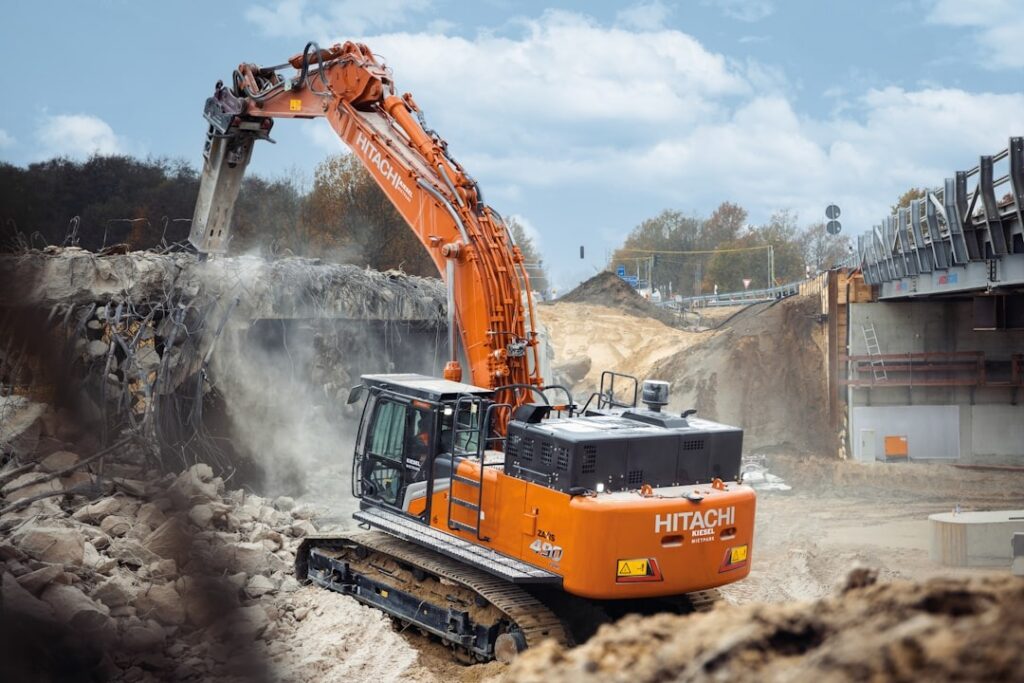
A construction equipment lease offers a powerful way to acquire machinery like a Hitachi excavator or New Holland wheel loader without the massive upfront capital required for a purchase. Instead of buying equipment outright, you make predictable monthly payments while it generates revenue on your projects. This strategic move toward financial flexibility is why leasing is a growing choice for contractors.
Key reasons contractors choose to lease construction equipment include:
- Preserving working capital for payroll, materials, and business growth.
- Accessing the latest technology, like newer Takeuchi compact excavators, without the burden of selling old equipment.
- Gaining flexible end-of-term options to purchase, return, or renew the lease.
- Realizing potential tax advantages, as lease payments may be deductible as operating expenses (consult your tax advisor).
- Enjoying manageable monthly payments since you are paying for the equipment’s use, not its full ownership value.
I’m Jeffrey J. Miller, President of Kelbe Brothers Equipment. For years, I’ve guided contractors through the equipment acquisition process, helping them make smart decisions about everything from Hitachi wheel loaders to New Holland skid steer loaders. Understanding your options—whether it’s a lease, purchase, or rental—is critical to keeping projects on budget and your business growing.
Why Consider a Construction Equipment Lease? The Core Benefits
For any construction business in Wisconsin, deciding how to acquire heavy equipment is a major decision. A construction equipment lease offers a strategic middle path between buying and renting. It allows you to access powerful machinery like Hitachi excavators or New Holland skid steer loaders without draining your bank account. Instead of a huge capital expense, leasing turns the acquisition into a manageable operating cost with predictable monthly payments.
This frees up cash for payroll, materials, and bidding on new projects. Furthermore, many leases qualify as off-balance sheet financing, meaning the equipment doesn’t appear as a liability on your financial statements. This can improve your financial ratios, which is important when seeking bonding or other financing.
Leasing also provides the flexibility to adapt to new technologies and shifting project requirements without being stuck with obsolete equipment. At Kelbe Brothers Equipment, we’ve helped countless Wisconsin contractors in Milwaukee, Madison, and Green Bay steer these decisions. For more on choosing the right machinery, see our Essential Guide to Construction Machinery.
How a Construction Equipment Lease Improves Cash Flow and Protects Capital
Cash flow is the lifeblood of any construction business. A large equipment purchase can tie up significant capital that could be used for payroll, materials, or weathering a slow payment from a client. Once that capital is spent on a machine, it’s locked in.
A construction equipment lease transforms this equation. Instead of a massive upfront expenditure, you spread the acquisition over several years with predictable monthly payments. This stability is invaluable for budgeting and managing the industry’s natural ups and downs. By preserving your working capital, you gain the flexibility to hire skilled operators, stock up on materials, or take on more projects without straining your finances.
Staying Competitive with the Latest Equipment
The construction industry moves fast, and using modern equipment provides a significant competitive edge. Newer machines, from Hitachi excavators to Takeuchi compact excavators, are more than just updated models—they are fundamentally better tools.
Today’s equipment offers benefits like:
- Improved fuel efficiency, which reduces operating expenses.
- Improved operator comfort with climate control and ergonomic designs, leading to greater productivity and safety.
- Advanced telematics systems for tracking machine performance and scheduling preventative maintenance.
Upgrading purchased equipment every few years is a major financial undertaking. A construction equipment lease solves this problem. At the end of your term (typically three to five years), you can simply return the equipment and lease a newer model. This ensures you’re always working with current, efficient, and competitive machinery, whether it’s a Link-Belt material handler or a Hitachi wheel loader. This advantage helps you complete jobs faster, more efficiently, and win more bids.
Navigating Your Options: Common Types of Leases
A construction equipment lease is not a one-size-fits-all solution. Different lease structures offer distinct advantages, and understanding them is key to choosing the right path for your business goals, whether you’re working in Milwaukee or anywhere across Wisconsin.
Understanding Operating vs. Capital Leases
The two main categories are operating and capital leases. The difference lies in their treatment of ownership and accounting.
- An operating lease is like a long-term rental. You use the equipment, such as a New Holland Compact Track Loader, for a set period while we retain ownership. A key benefit is its off-balance sheet treatment, which can improve your company’s financial ratios. This is ideal if you prioritize flexibility and want to upgrade equipment regularly.
- A capital lease (or finance lease) is structured with ownership in mind. It’s essentially a way to finance a purchase, like a Takeuchi compact excavator, through lease payments. The equipment appears as an asset on your balance sheet, and you may be able to claim depreciation. This makes sense when you intend to own the equipment long-term.
A Closer Look at Your End-of-Term Choices
Leasing provides valuable flexibility when the term ends. The two primary end-of-term structures are:
- A Fair Market Value (FMV) lease offers multiple choices. At the end of the term for your New Holland compact wheel loader, you can purchase it for its fair market value, return it and upgrade to a newer model, or renew the lease. This flexibility is perfect for adapting to changing technology and project needs. The residual value (the equipment’s estimated worth at lease end) determines the purchase price.
- A Dollar Buyout lease is designed for ownership. Payments are structured to cover the equipment’s value over the term. When the final payment is made on your Hitachi wheel loader or Link-Belt excavator, you own it for a nominal amount, often just one dollar. This is essentially 100% financing with guaranteed ownership.
Specialized Lease Structures for Unique Needs
Beyond standard leases, creative structures can solve specific business challenges.
- A sale-leaseback open ups capital from equipment you already own. You sell your Takeuchi compact wheel loader to us and immediately lease it back. You get a cash infusion while the equipment continues working for you without interruption.
- A wrap lease simplifies administration. If you have multiple leases for different machines, like Link-Belt material handlers and New Holland mini excavators, a wrap lease consolidates them into a single contract with one monthly payment, reducing paperwork.
The Financial Nuts and Bolts of a Construction Equipment Lease
Understanding the financial details of a construction equipment lease helps you make choices that strengthen your bottom line, whether you’re considering a Hitachi excavator for a project in Green Bay or a New Holland Crawler Dozer for work in Butler.
A well-structured lease can adapt to your business reality, especially the seasonal nature of construction in Wisconsin. Your financing should reflect your workflow, not fight against it. For more on short-term needs, our guide on Why Excavator Rental is the Smart Choice for Wisconsin Construction Projects offers additional perspective.
Tax Implications and Potential Savings
The tax treatment of your lease can significantly impact your business’s finances. The benefits depend on the lease structure, so it’s crucial to consult your tax advisor.
- With an operating lease, your monthly payments for a Hitachi wheel loader typically qualify as a deductible operating expense, reducing your taxable income.
- Capital leases are treated more like ownership. You generally record the equipment as an asset and take depreciation deductions. This structure may also allow you to use the IRS Section 179 Deduction, which lets businesses deduct the full purchase price of qualifying equipment in the year it’s placed in service.
Managing Seasonal Cash Flow with a Flexible Construction Equipment Lease
Wisconsin’s construction seasons create fluctuating revenue streams. A rigid payment schedule can strain cash flow during slower winter months. A construction equipment lease can be structured to match this reality.
We work with contractors to create seasonal payment structures. For a New Holland tractor loader backhoe that’s busy in the summer, we can arrange for lower payments or even skip payments during the winter. This aligns your expenses with your revenue, preserving working capital when you need it most and ensuring financial stability year-round.
Understanding Key Contract Terms
Before signing, understand the key terms of your construction equipment lease.
- Lease Term Length: The duration of the lease, which affects your monthly payment and end-of-term options.
- Usage Hour Limits: An estimate of how much you’ll operate the machinery. Exceeding these limits can result in overage charges, so accurate projection is key.
- Maintenance Responsibilities: The contract will specify who is responsible for maintenance and repairs. This typically differs between operating and capital leases.
- Insurance Coverage: Leases require you to carry specific insurance on the equipment to protect all parties.
- Return Conditions: If you plan to return the equipment, the contract outlines its expected condition, accounting for normal wear and tear.
Making the Right Choice: Lease, Buy, or Rent?
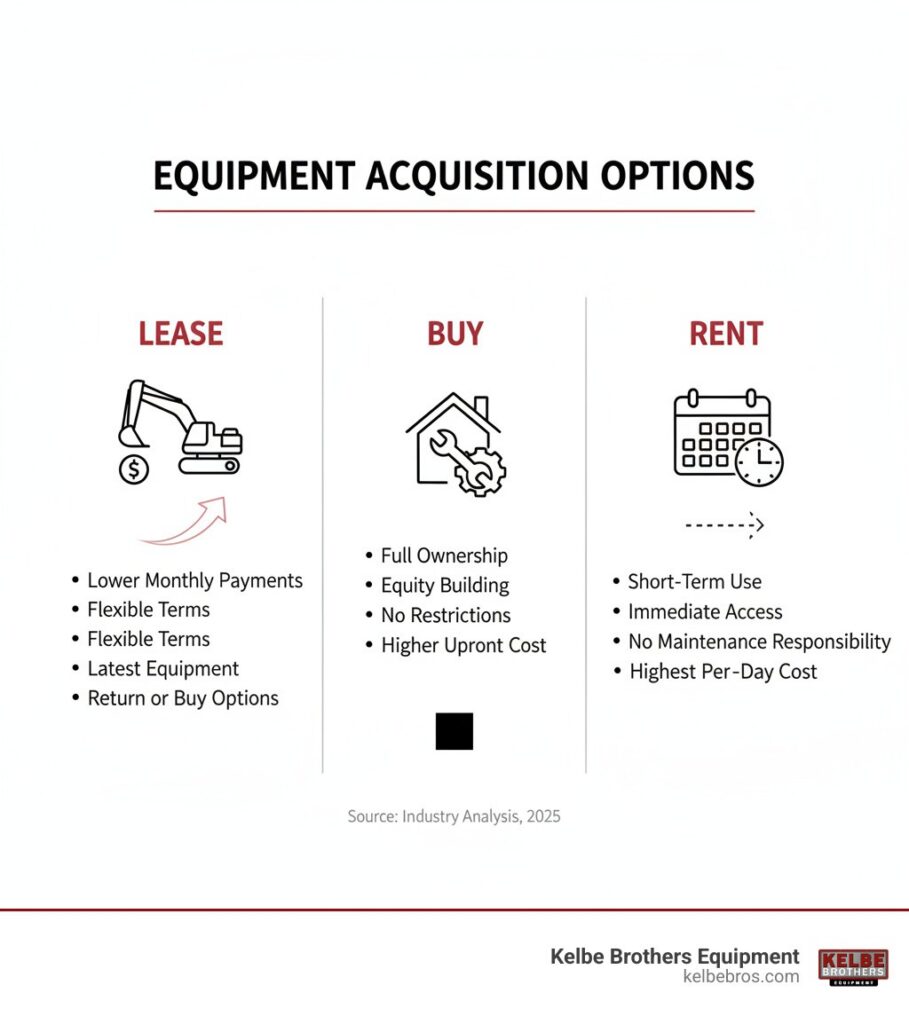
Deciding whether to lease, buy, or rent construction equipment is a critical strategic decision that impacts your cash flow, project capacity, and long-term growth. The best choice depends on your specific use for a Hitachi excavator, how long you need a New Holland dozer, and your business goals.
As a partner to Wisconsin contractors in Milwaukee, Madison, and beyond, we help you weigh the options that make the most sense for your unique situation.
When to Lease Your Equipment
A construction equipment lease is the smart choice when your priorities are financial flexibility and modern technology. Consider leasing if you want to:
- Preserve working capital for payroll, materials, or new opportunities.
- Access the latest technology by upgrading to newer Takeuchi compact excavators at the end of your term.
- Simplify budgeting with predictable monthly payments.
- Acquire project-specific machinery, like a specialized Link-Belt excavator, without a long-term ownership commitment.
When Buying Makes More Sense
For certain situations, outright ownership is the clear winner. Buying makes sense when you:
- Have a core piece of equipment, like a workhorse New Holland crawler dozer, that sees heavy, daily use.
- Want to build equity and grow the asset base of your business.
- Need the freedom of ownership to use or modify equipment like a New Holland wheel loader without restrictions.
- Have strong cash reserves or favorable financing, making the long-term economics of ownership favorable.
The Role of Short-Term Rentals
When neither a lease nor a purchase fits, short-term rentals are an invaluable tool. Renting is ideal for:
- Immediate, short-term needs, such as replacing a machine for a quick repair or handling a rush job.
- Testing equipment, like a Link-Belt material handler, before committing to a lease or purchase.
- Specialized or occasional tasks where ownership isn’t practical.
- Avoiding maintenance responsibilities, as we handle all servicing and repairs. Learn more on our Heavy Equipment Rental in Wisconsin page.
Most successful contractors use a hybrid strategy—owning core equipment, leasing machines they regularly use, and renting for specialized needs. We can help you find the right mix.
Frequently Asked Questions about Construction Equipment Leasing
When discussing a construction equipment lease, our Wisconsin contractors often ask the same practical questions. Here are the direct answers.
Who is responsible for maintenance and repairs on leased equipment?
The answer depends on your lease agreement.
- With an operating lease, we retain ownership and often handle scheduled maintenance. You are typically responsible for daily checks and repairs from misuse.
- With a capital lease, which is structured like a purchase, you are generally responsible for all maintenance and repairs for your Hitachi excavators or New Holland skid steer loaders.
We offer comprehensive service and maintenance plans to fit your needs, backed by 24/7 emergency support throughout Wisconsin to keep your projects moving.
Can I lease used construction equipment?
Yes, and it can be a very smart financial move. Leasing quality used equipment, such as used Hitachi compact excavators or used New Holland mini excavators, offers a more budget-friendly rate. Every used machine we lease undergoes a thorough inspection to ensure it’s reliable and ready to work. This is an excellent option for contractors looking to expand their capabilities while managing their budget.
What happens if I exceed the hour limits on my lease?
Most heavy equipment leases include usage hour limits because hours directly impact a machine’s value. If you exceed these limits on your Link-Belt excavator, your contract will specify overage fees to cover the additional depreciation.
To avoid this, provide an accurate usage estimate upfront and monitor your hour meter. If you anticipate going over, talk to us. We prioritize partnership over penalty fees and can often find a solution, like renegotiating terms, before charges accumulate. Communication is key.
Conclusion: Partnering for Growth with Smart Equipment Acquisition
The right approach to equipment acquisition can transform your construction business. Throughout this guide, we’ve explored how a construction equipment lease offers Wisconsin contractors a strategic path forward—one that preserves your capital, keeps your fleet modern, and adapts to your unique operational needs.
Whether you’re weighing the benefits of an operating lease for a Hitachi wheel loader, considering a dollar buyout option for a New Holland tractor loader backhoe, or exploring specialized structures like sale-leasebacks, the key is matching the financing strategy to your business goals. Smart equipment acquisition isn’t about following a formula; it’s about understanding your project pipeline, cash flow patterns, and long-term vision for growth.
We’ve seen how the right lease structure can help a Milwaukee contractor take on larger projects, enable a Green Bay business to upgrade to fuel-efficient Takeuchi compact excavators, or allow a Butler operation to consolidate its equipment portfolio through a wrap lease. These aren’t just financial transactions—they’re strategic decisions that directly impact your competitive position in Wisconsin’s construction industry.
At Kelbe Brothers Equipment, we’re more than an equipment provider. As a fourth-generation, family-owned company, we understand the challenges Wisconsin contractors face because we’ve grown alongside this industry for decades. Our experienced staff takes the time to understand your specific needs, whether you’re looking at construction equipment leasing, purchasing, or short-term rentals. We’re here to provide quick turnaround, hassle-free service, and the kind of support that keeps your projects moving forward—including rapid response and 24/7 emergency assistance when you need it most.
Making informed decisions about equipment acquisition means having a partner who genuinely cares about your success. We’re committed to helping you steer every option, from flexible lease terms that accommodate seasonal cash flow to maintenance plans that protect your investment.
Ready to explore how smart equipment financing can fuel your next phase of growth? Explore Your Equipment Financing Options with us today. Let’s have a conversation about your projects, your goals, and how we can help you build something great together. Because at Kelbe Brothers Equipment, your success is our success—and that’s been our promise to Wisconsin contractors for four generations.